
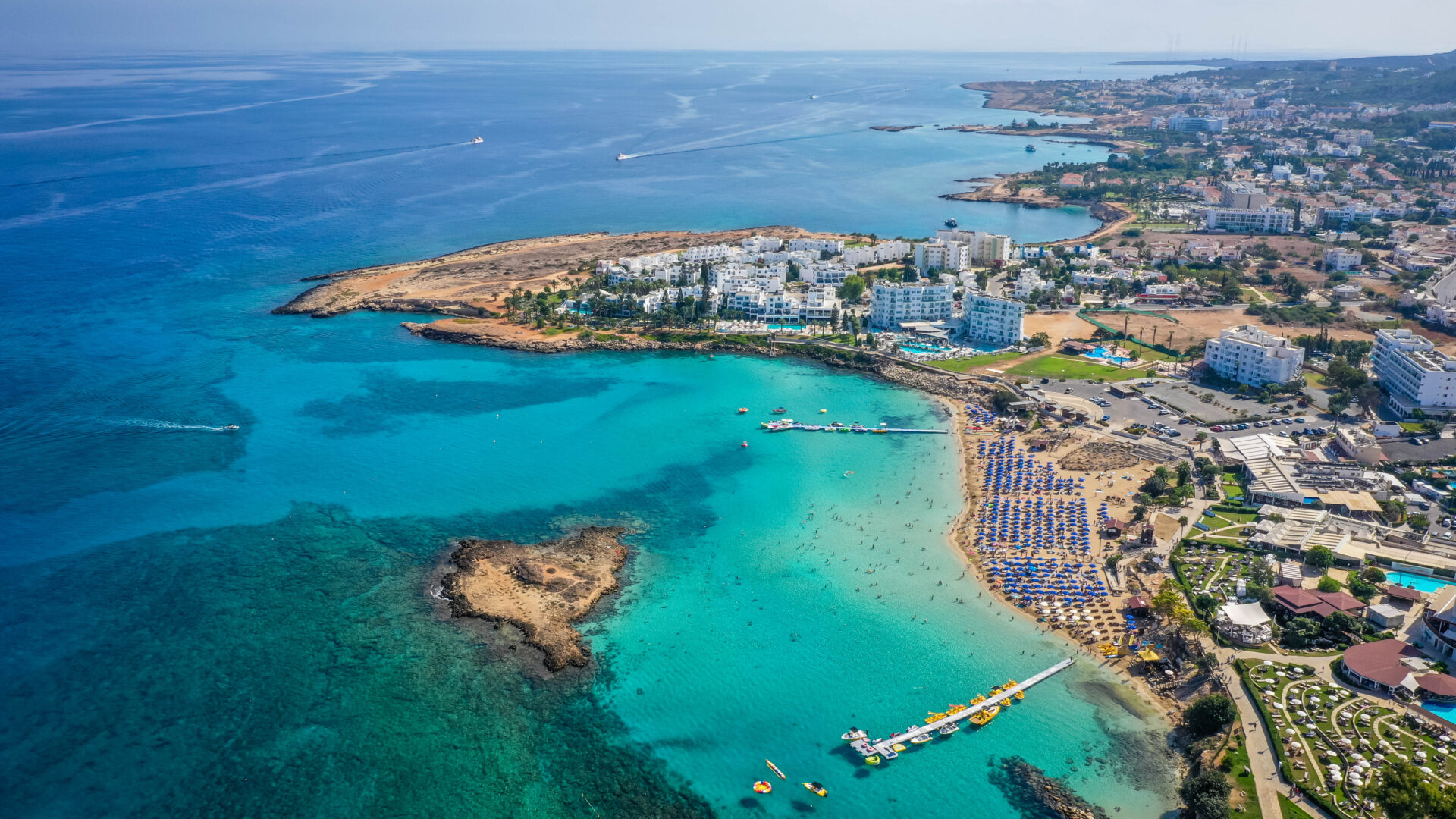
Over the past decade, Cyprus has quietly become one of the most talked-about destinations in European real estate. Sun, sea and low taxes are the headlines, but the real story is more interesting: a small island that has built a stable, transparent property market capable of attracting buyers from London to Dubai to Tel Aviv.
If you have been wondering why so many people are looking at Cyprus right now, here is what is actually driving the boom and what to keep in mind before you buy.
A location that simply makes sense
Cyprus sits at the meeting point of Europe, the Middle East and North Africa. Flights from most major European capitals take three to four hours, and the island shares time zones with key business hubs like Dubai and Tel Aviv. That convenience is one of the main reasons international buyers keep returning, whether for a holiday home, a relocation, or a long-term investment.
The eastern side of the island in particular Protaras, Ayia Napa and Paralimni has seen the sharpest growth, driven by its beaches, year-round climate and a wave of new infrastructure.
A maturing property development market
Cyprus’s property development sector is no longer the cottage industry it was twenty years ago. Today the market is dominated by experienced real estate developers delivering everything from boutique seafront villas to large mixed-use communities. Standards around design, energy performance and after-sales service have all risen sharply, partly because EU membership forces developers to comply with European construction and consumer-protection rules.
A good way to see how the market has evolved is simply to look at what is being built. Coastal projects like the Hestia Seaside Villas in Protaras or the Pliades Seafront Villas in Ayia Napa are a world away from the generic apartment blocks that defined earlier decades they’re closer in style and quality to what you’d expect on the Côte d’Azur or in Marbella.
Tax, residency and the EU factor
For many buyers, the financial case for investing in real estate in Cyprus comes down to three things: low taxes, no inheritance tax, and an investor-friendly residency program. Cyprus has double-taxation treaties with more than 65 countries and one of the lowest corporate tax rates in the EU.
On top of that, qualifying property purchases can lead to permanent residency a route that has become especially popular with families from outside the EU looking for a base in Europe. The official details are worth reading carefully before making any decisions; a plain-language overview is available here.
Rental yields that still make sense
Unlike some Mediterranean markets where prices have run away from rents, Cyprus still offers a reasonable balance. Short-term holiday rentals in tourist hotspots can deliver strong seasonal income, while long-term lets in Limassol and Larnaca remain a steady source of cash flow thanks to the influx of tech companies and remote workers.
Yields obviously vary by location, property type and developer, so it pays to look at the track record of the people behind a project. Property developers that have been active for several decades generally have a clearer sense of which areas will hold their value over time.
Quality of life is part of the investment
It’s easy to focus only on numbers, but anyone who has spent time in Cyprus knows that lifestyle is a big part of why the market keeps growing. The island consistently ranks among the safest in Europe, has excellent private healthcare, a well-regarded international school system, and more than 300 days of sunshine a year. For retirees, remote workers and families, those things matter as much as ROI.
This is also why developers focused on the higher end of the market are leaning into wellness, sustainability and smart-home features. Award-winning eco-friendly projects like the Eden Residences and Thea Residences are good examples they’re built around lifestyle, not just square meters.

What to watch out for
No market is perfect, and Cyprus is no exception. A few things worth keeping in mind:
- Title deeds. Always confirm that the developer can issue a clean title. Reputable developers handle this as standard.
- Off-plan risk. Buying off-plan is common in Cyprus, but make sure the developer has a track record of finishing projects on time.
- Location. Coastal hotspots get the headlines, but the real bargains are sometimes one street back from the seafront.
A short conversation with an experienced local developer is usually the fastest way to understand the nuances of a specific area. Most teams are happy to walk buyers through the process without any pressure you can usually reach out directly for an informal chat.
The bottom line
Cyprus has become a hot spot for real estate investment for the simplest reason of all: the fundamentals add up. A strategic location, EU-grade legal protections, low taxes, a growing property development scene, and a lifestyle that genuinely lives up to the brochures.
For anyone serious about real estate investment in the Mediterranean, it’s a market that deserves a closer look not because of the marketing, but because the numbers and the lived experience tend to agree.





 +
+ claudia@karmadevelopers.com.cy
 16 Kennedy Avenue (Kapparis), Paralimni